
The word “heritage” shows up on so many bag listings that it has almost stopped meaning anything. A distressed finish and a canvas strap get the label just as often as a bag actually built to last decades. The real question worth asking before you buy one isn't whether a bag looks like it has history, but whether it's made from materials capable of earning one.
This article looks at what heritage construction actually involves, why full-grain leather sits at the center of that conversation, and how it shows up in LUSTRA ATELIER's own collection, particularly The Sovereign, its full-grain leather weekender bag.
It's worth separating two things that often get bundled together in bag marketing: the look of heritage, and the substance of it. A bag can borrow the visual language of an older leather good, the color, the trim, the hardware finish, without any of the construction choices that actually make heritage pieces last. Understanding the difference is the whole point of shopping carefully in this category.
What Makes a Travel Bag “Heritage” Rather Than Just Old-Looking?
A genuine heritage travel bag is built from materials and construction methods designed to improve with age and remain functional for years, not just styled to resemble something aged. That distinction separates a bag with real heritage credentials from one that borrows the aesthetic through pre-distressed leather or an intentionally worn finish applied at the factory.
The difference shows up under use, not on a shelf. A bag with a manufactured vintage look tends to stay static once it leaves the store, since there's nowhere left for the wear pattern to go. A bag built with genuine full-grain materials and handsewn construction keeps developing character for as long as it's carried, which is really the point of calling something heritage in the first place.
What Is Full-Grain Leather, and Why Is It the Standard for Heritage Bags?
Full-grain leather is the layer of hide closest to the animal's original surface, left unsanded and unaltered so its natural markings and texture remain intact. Lower grades of leather, often labeled corrected-grain or top-grain, are sanded down and stamped with an artificial, uniform texture to hide scars, insect bites, and other natural imperfections in the hide.
That processing has consequences beyond appearance. Sanding removes the tightest, most durable fibers near the surface of the hide, which is part of why full-grain leather tends to outlast corrected leather under repeated use. It's also why full-grain leather is the material most heritage-focused makers reach for, including LUSTRA ATELIER, whose leather bag in the Palm Trilogy, The Sovereign, is built from vegetable-tanned cognac leather described specifically as “uncorrected.”
Full-Grain, Top-Grain, or Genuine Leather: What's the Difference?
These terms get used loosely, but they describe distinct grades of the same hide:
-
Full-grain leather keeps the outer layer of the hide completely intact, natural markings included. It's the most durable grade and the one that develops the richest patina.
-
Top-grain leather has had the outermost layer sanded away and often re-stamped with a uniform texture. It's more resistant to staining but loses much of the natural character and long-term durability of full-grain.
-
Genuine leather, despite the reassuring name, usually refers to a lower grade made from layers split from the hide and heavily processed. It typically wears out faster and doesn't develop meaningful patina.
Knowing which grade a bag actually uses, rather than trusting the word “leather” alone, is one of the simplest ways to judge whether a bag will hold up.
How Does Full-Grain Leather Develop Patina Over Time?
Patina is the gradual darkening and softening of leather caused by oils from handling, exposure to light, and everyday flexing, and it's considered a mark of quality rather than damage. Because full-grain leather retains its natural surface, it absorbs these small changes unevenly and organically, which is what gives an aged full-grain bag its depth of color and texture compared to a bag that started out artificially uniform.
This process happens gradually and isn't something you can rush without damaging the material. Regular handling, natural light exposure during travel, and the leather balm conditioning it needs periodically all contribute. A bag carried often for years will show more pronounced patina at the handles and corners, the places where hands and edges make the most contact, which is exactly where wear should show on a well-made leather piece.
Lustra Atelier's Approach to Heritage Construction
LUSTRA ATELIER's collection is built around three Luxury Weekender Bags known as the Palm Trilogy, and heritage materials run through all three, though in different forms.
-
The Sovereign (€490) is the full leather model, built entirely from full-grain, vegetable-tanned cognac leather that develops patina across the entire bag rather than just at the trim.
-
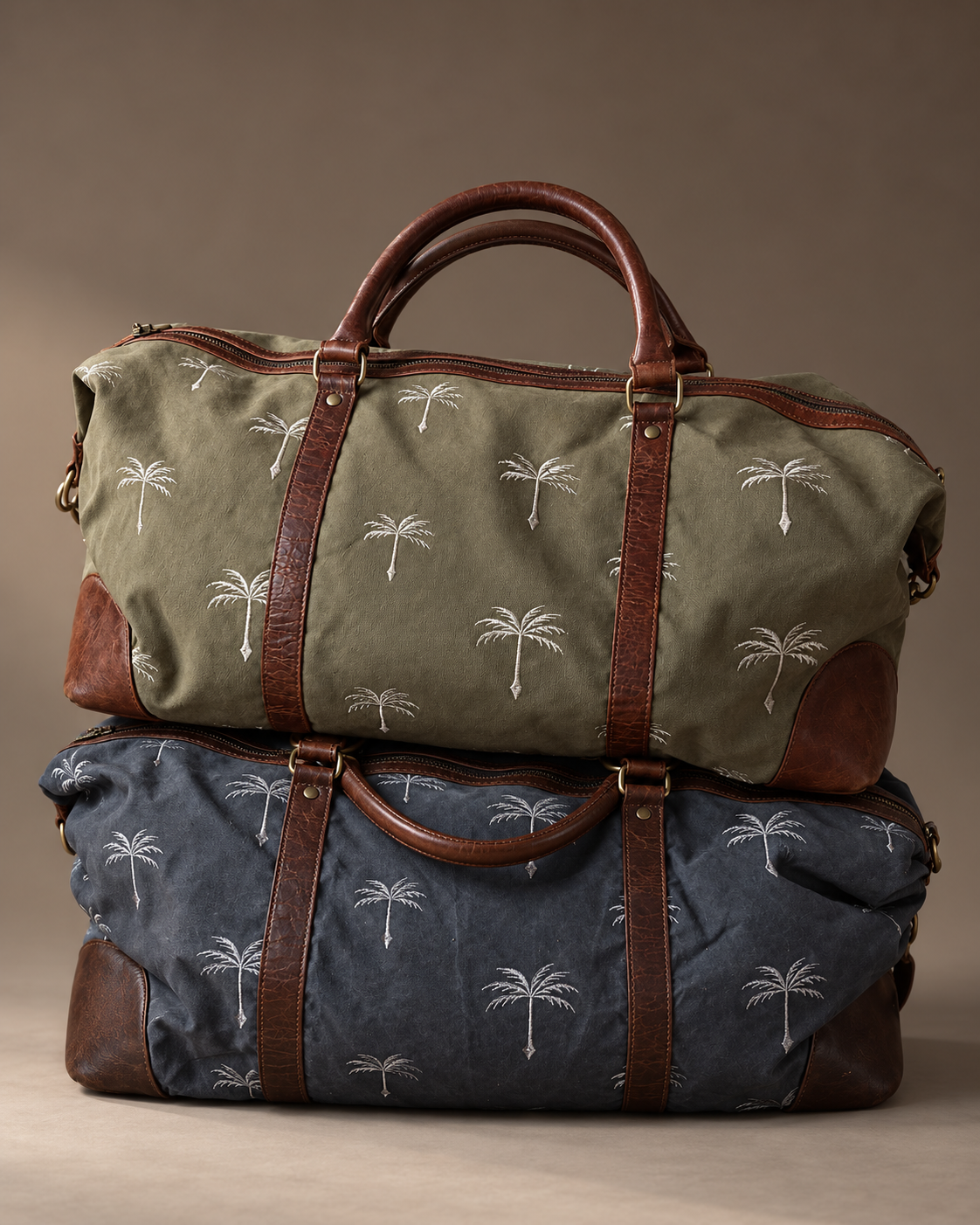
The Libertine (€390) uses heritage canvas in a muted khaki tone, paired with leather trim at the structural points.
-
The Hedonist (€390) is made from anthracite waxed canvas, also finished with cognac leather trim and hardware.
All three share the same handsewn construction standards and Comporta Rose interior lining, which means the difference between them is primarily about material character and formality, not about which one is more carefully made.
Construction Details That Define a Heritage-Grade Bag
Material alone doesn't make a bag heritage grade. Construction has to match it. A few specific details tend to separate genuinely durable heritage bags from bags that only look the part:
-
Handsewn stitching at load-bearing seams, doubled and locked at stress points rather than run through as a single machine pass.
-
A reinforced, independent base that lets the bag stand upright on its own instead of sagging under its contents.
-
Reinforced handle attachments, secured through the bag panel rather than simply glued or riveted to the surface.
-
Solid, unlacquered hardware, which ages in tone rather than flaking, chipping, or discoloring the way plated hardware often does over time.
Each of these details is a practical answer to a specific failure point. Bags rarely fail all at once. They fail at the seams, the base, or the handle attachments first, which is exactly where heritage-grade construction concentrates its reinforcement.
Does a Heritage Bag Still Work for Modern Travel?
Yes, a well-designed heritage travel bag can meet the same practical requirements as any modern weekender, including carry-on compliance and a functional interior layout. The materials and finishing may reference older craft traditions, but the sizing and organization are built around how people actually travel now, which is a reasonable standard to hold any category of luxury travel bags to.
The Palm Trilogy is sized at roughly 52 by 32 by 23 centimeters, around 35 to 38 liters, enough for three to four days of travel while staying within cabin baggage limits on most major airlines. Inside, each bag holds a main compartment, one zipped pocket, two open slip pockets, and a padded sleeve for laptops up to 14 inches. A heritage aesthetic doesn't have to come at the cost of a laptop sleeve or a place to put your passport.
How Should You Care for a Full-Grain Leather Heritage Bag?
Full-grain leather needs less maintenance than people expect, but the maintenance it does need matters more than with lower-grade leather.
-
Apply a leather balm or conditioner roughly twice a year to keep the material supple and support even patina development.
-
Store the bag filled or stuffed with paper between trips so it holds its shape rather than collapsing.
-
Keep it out of prolonged direct sunlight and damp storage, both of which cause uneven fading or drying rather than the gradual, even darkening that makes patina attractive in the first place.
Canvas components, where present, need a lighter touch. Waxed canvas should be brushed clean when dry and re-waxed annually to maintain water resistance, while unwaxed heritage canvas can generally be wiped down with a damp cloth.
Is a Full-Grain Leather Heritage Bag Worth the Investment?
For a traveler who plans to use one bag for years rather than replace it every season, a full-grain leather heritage bag is generally worth the higher upfront cost. The math works differently than it does for a cheaper bag replaced every year or two. Reinforced seams and a reparable structure mean fewer total replacements, and the leather itself looks better over time instead of wearing out.
LUSTRA ATELIER backs that expectation with a repair policy covering hardware, stitching, and structural issues, detailed on its Heritage Travel Bags page alongside the construction specifics for each model. A maker willing to stand behind repairs is telling you, implicitly, how long the bag is expected to stay in service.
Choosing Materials That Are Built to Last
A genuinely heritage travel bag earns the word through what's underneath the surface, not just what it looks like on day one. Full-grain leather, handsewn seams, and hardware that ages honestly are the details worth checking, whatever brand you're comparing.
Within Lustra Atelier's own range, that standard runs through the full collection, from The Sovereign's full leather build to the heritage canvas used elsewhere in the Palm Trilogy. Choosing a bag this way means thinking less about how it looks in a photo and more about how it will look after years of actual use, which is, in the end, the entire point of buying something built to last.