
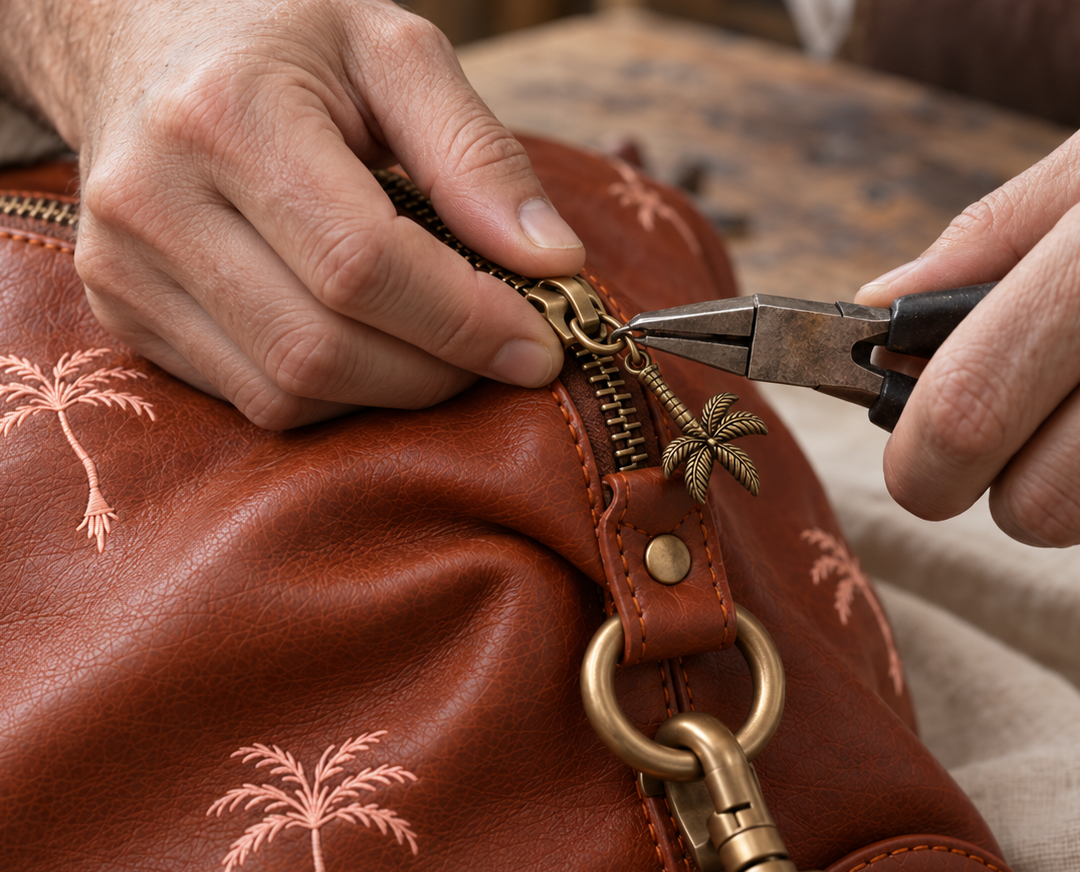
Type “handmade leather bag” into a search bar and you'll get thousands of results, most of them describing bags that were never touched by a single pair of hands beyond quality control. The word has been stretched so thin by marketing copy that it barely means anything anymore. Somewhere underneath all of that, real handmade leather bags still exist, and they're worth knowing how to spot.
This article is for anyone tired of guessing whether “handmade” is a genuine production method or a line on a product page. It covers what handmade actually means in leather goods, what separates a well-made bag from one that only photographs well, and how LUSTRA ATELIER approaches the craft with its own leather weekender, The Sovereign.
None of this is about chasing a label for its own sake. A bag you carry every week for a decade is a different purchase than one you replace in two years, and the difference between those two outcomes usually comes down to decisions made before the bag ever reaches a store shelf or a checkout page.
What Does “Handmade” Actually Mean for a Leather Bag?
A genuinely handmade leather bag is cut, assembled, and sewn by hand in small batches, with individual attention at the stitching and finishing stages, rather than run through an automated assembly line. That doesn't mean every single step happens without a tool. It means the seams that carry weight, the base that holds the bag's shape, and the points where handles attach are built and checked by a person, not a machine set to repeat the same motion thousands of times a day.
This distinction matters because most bags described as handmade are only partially so. A leather panel might be cut by hand and stitched by machine end to end, with no doubling or reinforcement at the seams most likely to fail. LUSTRA ATELIER works with a family-run atelier that produces bags in small, controlled runs, agreeing on individual specifications before cutting even begins. That's a meaningfully different process than a factory line producing thousands of identical units a month.
Why Choose a Handmade Leather Bag Over a Mass-Produced One?
The honest answer is that a handmade bag costs more and takes longer to produce, and in exchange you get a few things mass production struggles to deliver:
-
Reinforced construction at the points that actually fail. Handsewn, doubled stitching at load-bearing seams holds up to years of packing, unpacking, and setting the bag down hard on floors and car seats.
-
Materials that age instead of degrading. Full-grain leather develops a visible patina with use. Solid, unlacquered hardware loses its shine but keeps its color, rather than flaking or discoloring unevenly the way plated hardware often does.
-
A bag that looks like yours, not a catalog photo. Personalization, such as a monogram tag, is more commonly offered by smaller makers producing in batches small enough to accommodate individual requests.
None of this means mass-produced bags are poorly made across the board. It means the tradeoffs are different, and a buyer who understands what handmade construction actually buys them can make a more informed decision either way.
What Makes Full-Grain Leather Different From Other Leather Bags?
Full-grain leather keeps the hide's natural surface intact, while corrected-grain leather is sanded and stamped with an artificial, uniform texture to hide imperfections. Full-grain leather shows the character of the original hide, including natural variation, and it develops a deeper, richer patina as it's handled and exposed to light over time. Corrected-grain leather tends to stay visually static, since the surface has already been altered to look consistent from day one.
This is the material behind The Sovereign, LUSTRA ATELIER's full leather weekender within its Palm Trilogy collection. It's built from vegetable-tanned cognac leather described as “uncorrected,” meaning the grain is the hide's own rather than sanded or stamped to a uniform finish. As a leather bag ages with regular use, it's expected to soften and deepen in tone, which is the point rather than a flaw to avoid.
How Can You Tell a Leather Bag Is Genuinely Well Made?
A handful of physical details tend to separate real handmade craftsmanship from bags that only market themselves that way. Look for these before you buy:
-
Handsewn stitching at stress points. Doubled and locked seams at the base, handles, and corners hold up far longer than a single machine-run line of stitching.
-
A reinforced, independent base. A well-built bag stands upright on its own instead of sagging or tipping once it's packed.
-
Reinforced handle attachments. Handles secured through the bag panel and reinforced at the attachment point are less likely to tear loose under real weight.
-
Hardware that ages honestly. Solid, unlacquered metal develops character over time. Plated or lacquered hardware tends to chip or discolor unevenly instead.
-
Restrained branding. A bag that leans on visible logos to communicate value is often compensating for less investment in the materials and construction underneath.
How Big Is a Leather Weekender Bag, and What Can It Actually Carry?
A well-designed leather weekender typically holds three to four days of clothing and essentials while still meeting carry-on size requirements for most major airlines. That usually lands around 35 to 38 liters of capacity, roughly 52 by 32 by 23 centimeters.
At that size, a thoughtfully organized interior can fit two pairs of shoes, a suit or several linen shirts, a washbag, a book, and a laptop stored upright rather than flat. The Sovereign, along with the two canvas models in the Luxury Weekender Bags collection, shares the same interior layout: a main compartment, one zipped pocket, two open slip pockets, and a padded sleeve that fits laptops up to 14 inches. The material changes across the range, but the practical footprint doesn't.
Leather or Canvas: How Should You Decide?
Leather and canvas suit different priorities, and neither is the objectively correct choice.
Leather reads more formal, carries more visual weight, and develops a deeper character over years of use, which makes it a natural fit for business travel or situations where the bag itself is part of the impression. Canvas is lighter, more water-resistant, and more forgiving of scuffs and rough handling, which suits frequent, casual trips better. Within LUSTRA ATELIER's own Luxury Travel Bags, that difference is reflected directly in price: the canvas models sit at €390, while the full leather Sovereign is priced at €490.
How Should You Care for a Handmade Leather Bag?
Leather rewards a small amount of regular attention, and the routine is simpler than most people expect.
-
Apply a leather balm or conditioner roughly twice a year to keep the material supple and prevent it from drying out.
-
Store the bag filled or stuffed with paper between trips so it holds its shape rather than collapsing in on itself.
-
Avoid prolonged direct sunlight and damp storage, both of which accelerate uneven aging.
Done consistently, this is the difference between a bag that develops a rich, even patina over the years and one that dries out, cracks, or fades unevenly well before its time.
Is a Handmade Leather Bag High Maintenance?
No, a well-made full-grain leather bag needs only occasional attention, not constant upkeep. Twice-yearly conditioning and sensible storage cover most of what the leather needs between trips. The bigger maintenance difference shows up in repairs rather than daily care: a handsewn bag with reinforced seams and a documented repair policy is generally easier to keep in service for years than a bag held together primarily with glue and machine stitching, which tends to fail all at once rather than in small, fixable ways.
What Personalization Options Come With a Handmade Leather Bag?
Individuality is one of the practical advantages of buying from a smaller maker rather than a mass-market brand. LUSTRA ATELIER offers a personalized leather monogram tag, up to three characters, on each bag in place of visible external branding. It's a quieter way to make a bag identifiably yours without turning it into a walking advertisement for the maker.
This approach also reflects a broader idea worth considering when comparing handmade leather bags generally: a well-made bag should hold its value through material and construction, not through how recognizable its logo is from across a room.
Is a Handmade Leather Bag Worth the Investment?
For someone who travels regularly and wants a bag that improves with age rather than wearing out, yes, a genuinely handmade leather bag tends to be worth the higher upfront cost. The value shows up over years, not at the point of purchase. Reinforced seams mean fewer repairs. Full-grain leather means the bag looks better at five years than at five months. A maker offering repair coverage for hardware and stitching issues, as detailed on LUSTRA ATELIER's Heritage Travel Bags page, adds a layer of confidence that the bag is meant to be used for a long time, not replaced after a season or two.
Buying With Intention
A handmade leather bag isn't the right choice for everyone, and it doesn't need to be. But for a traveler who wants a bag that ages honestly, holds up to real use, and carries a personal mark rather than a brand's, the difference between genuine handmade construction and a marketing label is worth understanding before you spend the money.
Lustra Atelier builds its Palm Trilogy around that distinction, pairing full-grain leather and heritage canvas with the kind of construction details covered throughout this article. Whichever bag you eventually choose, the questions are the same: who made it, how was it sewn together, and will it still look right in ten years.