
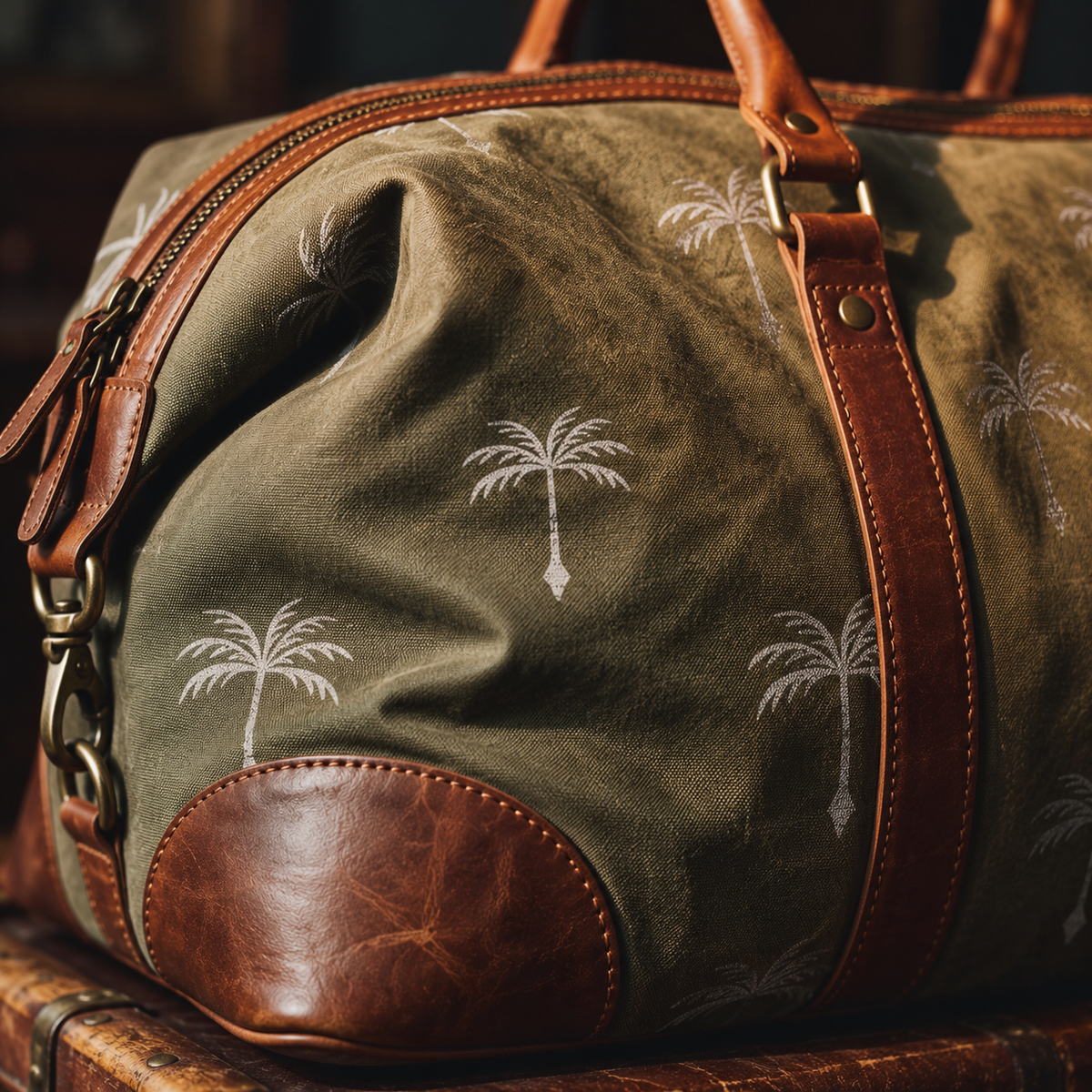
Search for “best heritage travel bag” and most results skip straight to a list, without ever explaining what “best” is actually measuring. Best by what standard? Best for whom? A bag that's best for a once-a-year vacation is rarely the same bag that's best for someone who travels most weeks of the year.
Rather than hand you a ranking, this article sets out the criteria worth using to judge a heritage travel bag for yourself, then walks through how LUSTRA ATELIER's own Sovereign, its full-grain leather weekender, holds up against them. The goal is a framework you can apply to any bag you're considering, not just the one this article happens to be written for.
What Actually Makes a Travel Bag “the Best” in the Heritage Category?
The best heritage travel bag combines materials built to age well, construction reinforced at the points that actually fail, a size suited to real travel, restrained personalization over branding, and buying terms that reflect confidence in the product. None of that is subjective in the way “best” often sounds. Each of those things can be checked directly on any bag you're comparing, which is a more useful starting point than trusting a listicle's opinion.
That's the structure this article follows: five concrete criteria to check before buying, plus a sixth worth thinking about once you own the bag, then an honest look at how one specific bag measures up.
None of these criteria are about brand prestige. A bag can be expensive without meeting any of them, and a more modestly priced bag can meet all four if the maker has prioritized the right things. Price is a signal worth reading carefully, not a substitute for checking the details yourself.
Criteria One: Materials That Age Instead of Wearing Out
A heritage-grade bag is typically made from full-grain leather or tightly woven waxed canvas, both of which develop character with use rather than simply degrading. Full-grain leather retains the hide's natural surface and darkens into a visible patina over years of handling. Waxed canvas stays lighter and more water-resistant while wearing in with a softer, more relaxed texture.
The material grade matters more than the word “leather” on its own. Full-grain leather is different from corrected-grain leather, which is sanded and stamped into a uniform finish that hides natural variation but also removes some of the hide's most durable fibers. The Sovereign, LUSTRA ATELIER's leather bag within the Palm Trilogy, is built from full-grain, vegetable-tanned cognac leather specifically described as “uncorrected,” which is the standard worth checking for in this category generally.
Criteria Two: Construction Reinforced at the Points That Actually Fail
Material alone doesn't determine how long a bag lasts. Construction does. A handful of specific details separate bags that hold up from bags that only look like they will:
-
Handsewn stitching at load-bearing seams, doubled and locked rather than run through as a single machine pass.
-
A reinforced, independent base that lets the bag stand upright rather than sagging once it's packed.
-
Reinforced handle attachments, secured through the bag panel instead of just glued or riveted to the surface.
-
Solid, unlacquered hardware that ages in tone instead of flaking or discoloring unevenly.
These are the same points where most bags eventually fail, regardless of price. A bag that reinforces all four is doing something meaningfully different from one that only addresses the ones visible in a product photo.
Criteria Three: A Size and Layout Built for How People Actually Travel
A well-sized heritage travel bag should hold three to four days of essentials while still qualifying as carry-on luggage on most major airlines, typically around 35 to 38 liters. Heritage styling shouldn't come at the cost of practicality. A beautifully made bag that doesn't fit in an overhead bin or hold a laptop isn't actually solving the problem it's being bought for.
The Palm Trilogy collection, including Luxury Weekender Bags like The Sovereign, is sized at roughly 52 by 32 by 23 centimeters, with a main compartment, one zipped pocket, two slip pockets, and a padded laptop sleeve fitting up to 14 inches. That's enough structure for two pairs of shoes, a suit or several shirts, a washbag, a book, and a laptop stored upright, which covers most short trips without needing to check a bag.
Criteria Four: Personalization and Restrained Branding
Individuality is an underrated criterion in this category. A bag covered in visible logos is communicating something about status to strangers. A bag with a small personal mark, a monogram rather than a brand name, is communicating something to the owner instead.
LUSTRA ATELIER's approach reflects this directly: every bag in the Palm Trilogy carries a personalized leather monogram tag of up to three characters, with minimal external branding otherwise. Whether this matters to you depends on what you actually want a travel bag to say. For a lot of buyers in this category, quieter is genuinely better.
Criteria Five: Transparent Pricing and Aftercare Support
The best heritage travel bags come from sellers who commit to clear pricing and stand behind the product after the sale, through a stated return policy and repair coverage. A maker unwilling to guarantee either is implicitly telling you something about how long they expect the bag to last.
LUSTRA ATELIER's own terms are a useful example of what to look for elsewhere: all-in pricing that includes taxes and shipping, a fourteen-day return window on unused bags, and repair coverage for hardware, stitching, and structural issues. These specifics, along with full construction details for each model, are laid out on the brand's Heritage Travel Bags page rather than left vague.
A Sixth Criterion Worth Adding: How Easy Is It to Maintain?
The best heritage travel bag should also be reasonably simple to look after, since a maintenance routine nobody follows doesn't do much good. For full-grain leather, that generally means:
-
Conditioning with a leather balm roughly twice a year to keep the material supple.
-
Storing the bag filled or stuffed with paper between trips so it holds its shape.
-
Keeping it away from prolonged direct sunlight and damp storage, both of which cause uneven aging rather than the gradual, even darkening that makes patina worth having.
Waxed canvas asks for even less: brushing off dirt when dry, an occasional cold rinse, and re-waxing once a year to maintain water resistance. Either routine takes a few minutes a couple of times a year, which is a reasonable trade for a bag meant to last far longer than something replaced annually.
How Does The Sovereign Measure Up Against These Criteria?
Running The Sovereign through the same five criteria used above gives a concrete answer rather than a marketing claim:
-
Materials: Full-grain, vegetable-tanned cognac leather, uncorrected and expected to patina with use.
-
Construction: Handsewn seams, a reinforced independent base, reinforced handle attachments, and solid unlacquered hardware.
-
Size: 52 by 32 by 23 centimeters, 35 to 38 liters, carry-on compliant with a four-compartment interior.
-
Personalization: A monogram tag up to three characters, no visible logo.
-
Terms: All-in pricing, a fourteen-day return window, and repair coverage.
-
Maintenance: A twice-yearly leather balm routine, with no specialized products or professional servicing required.
At €490, it's the most formal and leather-forward option within the collection. That doesn't make it automatically the best choice for everyone, only the best example of what full leather heritage construction looks like when every criterion is addressed rather than assumed.
Is Leather or Canvas the Better Heritage Choice for You?
If you want maximum durability, a more formal look, and don't mind extra weight, full-grain leather is the stronger heritage choice. If you'd rather travel light, move through casual settings more often, and prefer a bag that's more forgiving of scuffs and weather, waxed or heritage canvas serves that purpose better.
Within Lustra Atelier's Palm Trilogy, that choice sits between The Sovereign's full leather build and the canvas construction of The Hedonist and The Libertine, priced €100 lower at €390 each. Neither path is more heritage than the other. They're built to the same construction standard, just in different materials suited to different travel habits.
There's No Single Best, Only the Best Fit
The honest answer to “what's the best heritage travel bag” is that it depends on what you're checking for, and most listicles skip that step entirely. Materials that age well, construction reinforced where it matters, a size built for real travel, restrained personalization, and terms that reflect confidence in the product are the five things worth verifying, whichever bag you're actually considering.
Within the broader category of luxury travel bags, a bag that satisfies all five isn't hard to identify once you know what to look for. It just takes checking rather than taking the word “heritage” at face value.
The next time a “best heritage travel bag” list crosses your feed, it's worth running its top pick through the same six points covered here. A bag that holds up under that kind of scrutiny earns the label. One that doesn't is probably just well photographed.