
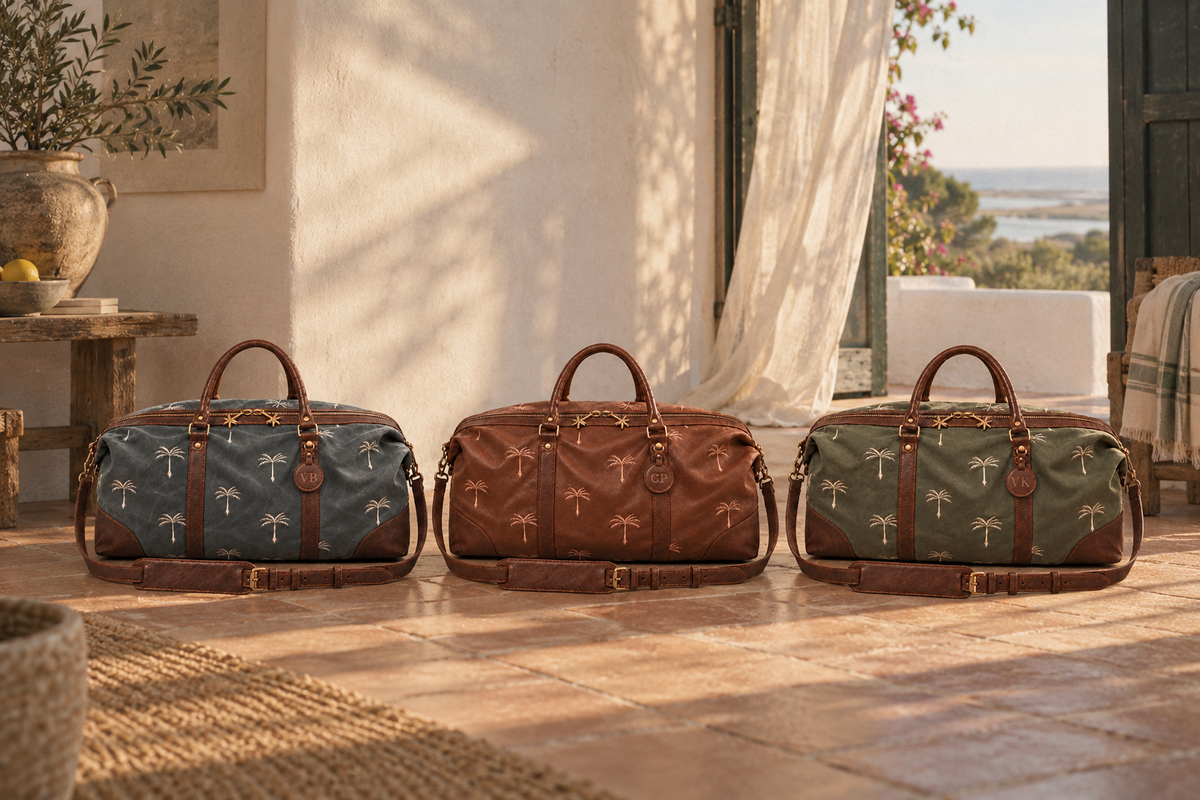
Most people start this search with a simple question and end up with a harder one. “Where can I buy a good weekender bag” quickly turns into “how do I tell a good one from a bag that just looks good in photos.” Marketplaces are full of options, department stores stock a handful of familiar names, and every third bag online calls itself luxury. Few of them earn it.
This guide is for anyone shopping for a weekender bag they intend to keep for years, not just a season. It covers what actually separates a well-made luxury weekender from an ordinary travel bag, where buying direct from the maker changes the experience, and what to check before you commit. Where it's useful, it draws on LUSTRA ATELIER's own Palm Trilogy as a concrete example of how these decisions play out.
A weekender is one of the few bags you'll actually pack by hand, hold in your lap on a flight, and set down on hotel floors and car seats for years. Getting it wrong is a slower, more visible mistake than most travel purchases, which is exactly why it's worth spending a few extra minutes understanding what you're paying for before you buy.
What Makes a Weekender Bag “Luxury” in the First Place?
A weekender bag earns the word luxury through its materials and construction, not its price tag or logo. Full-grain leather or densely woven waxed canvas, solid unlacquered hardware, reinforced stitching at every load-bearing seam, and a structured base that lets the bag stand on its own are the details that separate a bag built to last from one built to sell.
Branding is where this distinction gets tested. Bags covered in visible logos are often selling recognition rather than substance. LUSTRA ATELIER takes the opposite approach with its Luxury Weekender Bags: each piece carries a small personalized monogram tag, up to three characters, instead of a brand mark. The idea is that the bag should hold up on its own terms, not because of what it announces.
Where Should You Actually Buy One?
Buying Direct From the Maker
Buying directly from a brand's own site, rather than a department store or a general marketplace, usually means clearer answers to the questions that matter: what the bag is made of, how it's constructed, what happens if it doesn't fit your needs, and what the all-in price actually is.
Lustra Atelier sells its collection this way. The pricing shown includes taxes and shipping, so there's no surprise total at checkout, and every bag can be personalized with a monogram at the point of purchase. That level of transparency is harder to get from a third-party listing, where you're often one step removed from the people who actually made the bag.
Small, controlled production runs are part of why this works. When a maker produces bags in limited batches rather than mass-manufacturing at scale, they can agree on individual specifications before cutting even begins, and they can stand behind the finished product with more confidence than a brand relying on a long, anonymous supply chain.
Is It Safe to Buy a Luxury Weekender Bag on a Marketplace?
It can be, but it carries more risk than buying direct. Open marketplaces mix genuine sellers with resellers and counterfeits, and return policies, warranties, and care guidance vary listing to listing rather than sitting behind one consistent brand promise. If you do buy through a marketplace or a multi-brand retailer, check that the listing names the actual manufacturer, states materials specifically rather than vaguely, and links back to a return and repair policy you can verify independently.
What to Check Before You Buy
Before adding a weekender bag to your cart, whether from a boutique, a department store, or an independent maker's own site, a few questions are worth answering:
-
Does the seller state the full price upfront, including taxes and shipping, or does it change at checkout?
-
Is there a clear return policy, and how long does it last?
-
Are care instructions provided for the specific materials used?
-
Can the bag be personalized, and is that included or an add-on?
-
Are repairs for hardware or stitching issues covered after purchase?
A seller that answers all five clearly is usually one that stands behind what it makes. LUSTRA ATELIER, for example, offers a fourteen-day return window on unused bags in original packaging, and covers hardware, stitching, and structural issues under its repair policy, which says something about how the bags are expected to hold up over time.
What Should You Look for in Materials and Construction?
The two materials you'll see most often in a well-made weekender are full-grain leather and waxed or heritage canvas, and each suits a different kind of travel. Full-grain leather is heavier, more formal, and develops a visible patina as it ages. Waxed canvas is lighter, water-resistant, and wears in with a softer, more relaxed character.
LUSTRA ATELIER's Palm Trilogy illustrates the difference directly. The Sovereign is built from a leather bag shell in full-grain, vegetable-tanned cognac leather, described as “uncorrected,” meaning the grain is the hide's own rather than sanded or stamped uniform. The Hedonist and The Libertine use waxed and heritage canvas instead, paired with leather trim at the handles and structural points.
A few construction details are worth checking on any bag, regardless of material:
-
Handsewn stitching at load-bearing seams, doubled and locked at stress points
-
A reinforced base that lets the bag stand upright on its own rather than sagging under its contents
-
Handles reinforced at the attachment points and secured through the bag panel, not just glued or riveted to the surface
-
Solid, unlacquered hardware that ages in tone rather than flaking or tarnishing
How Big Should a Luxury Weekender Bag Be?
A well-sized luxury weekender bag holds three to four days of clothing and essentials while still qualifying as carry-on luggage on most major airlines. That typically lands around 35 to 38 liters, with rough dimensions near 52 by 32 by 23 centimeters.
At that size, a well-organized interior can comfortably fit two pairs of shoes, a suit or a stack of linen shirts, a washbag, a book, and a laptop stored upright. LUSTRA ATELIER's three models share this exact footprint and interior layout across the collection: a main compartment, one zipped pocket, two open slip pockets, and a padded sleeve that fits laptops up to 14 inches. Keeping the interior consistent across different materials means the choice between models comes down to look and material, not capacity.
Is a Full-Leather Bag Worth the Extra Cost Over Canvas?
It depends on how you plan to use it. A full-leather weekender tends to read more formal and ages into a deeper, richer character over years of use, which makes it a stronger choice for business travel or occasions where the bag itself is part of the impression. Canvas is lighter to carry, more forgiving with scuffs and weather, and better suited to frequent, casual trips.
Within the Palm Trilogy, that tradeoff shows up directly in price: The Hedonist and The Libertine, both canvas, are priced at €390, while The Sovereign, in full leather, is €490. Neither material is objectively better. The right one depends on whether you value the lower weight and casual wear of canvas or the long-term patina and formality of leather.
Craftsmanship Details That Signal Real Quality
Beyond material, a handful of small details tend to separate genuinely well-made bags from bags that only look that way in product photos.
-
Check the seams. Handsewn, doubled stitching at stress points holds up to years of packing and unpacking. Machine stitching alone at these points is a common failure point.
-
Check the hardware finish. Unlacquered brass or similar metal ages honestly, losing shine but keeping its color, rather than peeling or discoloring unevenly.
-
Check how the bag stands. A reinforced, independent base means the bag holds its shape when set down, rather than slumping under its own contents.
-
Check the branding. Bags that rely on visible logos to signal value are often compensating for less investment in the materials themselves.
These are the kind of details covered on LUSTRA ATELIER's own heritage travel bags page, which walks through the construction of each model piece by piece rather than listing specifications in the abstract.
How Should You Care for a Luxury Weekender Bag After You Buy It?
Buying a well-made bag is only half the equation. How you care for it determines whether it actually lasts.
-
Canvas: Wipe clean with a damp cloth as needed.
-
Waxed canvas: Brush off dirt when dry, rinse with cold water if needed, and re-wax annually to maintain water resistance.
-
Leather: Apply a leather balm or conditioner twice a year, and store the bag filled or stuffed with paper so it holds its shape between trips.
None of this is complicated, but it's the difference between a bag that looks better after five years and one that looks worn out after one.
A Practical Checklist Before You Buy
Before you commit to a weekender bag, it helps to be honest about how you'll actually use it:
-
How many days do you typically pack for, and does the bag's capacity match that?
-
Does it need to fit as carry-on on the airlines you fly most?
-
Do you prefer the formality and patina of leather, or the lighter, more casual wear of canvas?
-
Does the seller offer a clear return policy and repair coverage?
-
Would personalization, such as a monogram, matter to you?
Answering these before browsing narrows the search considerably, whether you end up looking at luxury travel bags from an independent maker or a more familiar retail name.
Buying a Bag That's Built to Be Used
The best luxury weekender bags aren't the ones with the loudest branding. They're the ones built from honest materials, constructed to take real wear, and backed by a seller willing to stand behind the details. Full-grain leather or well-waxed canvas, reinforced seams, hardware that ages instead of flaking, and a size that actually fits how you travel: these are the things worth paying for.
Where you buy matters almost as much as what you buy. A maker who prices transparently, explains their materials plainly, and stands behind repairs is telling you something about how the bag itself was made. That's worth more than a familiar name on the tag.