
A bag is, by definition, something you carry. It has weight. It has handles because it needs to be held. In the plainest sense, it is luggage — and luggage is rarely what anyone means when they talk about freedom.
So the question is fair. How can an object made to hold things stand for the feeling of being held by nothing?
The answer is not in the bag. It is in what the bag allows you to leave behind.
Freedom is a question of what you leave behind
Most of what slows us down when we travel is not distance. It is choice. Which jacket, which shoes, which version of yourself you might need on the third evening. Every bag answers that question, whether we notice it or not. A large suitcase answers: bring everything. A good weekender answers: bring what matters.
520 × 320 × 230 millimetres is not an arbitrary size. It holds two days, perhaps three. A change of clothes, a book, the few things you would miss. It fits overhead, on a back seat, under a café table on a harbour at six in the morning. It does not need to be checked, collected or waited for.
The Libertine weighs around 800 grams empty — less than most laptops. It is light because it asks for nothing: no protocol, no careful handling. Khaki canvas, antique brass, a lining in Comporta Rose that you only see when you open it. You throw it into a car. You leave the next morning.
That is the kind of freedom a bag can offer. Not the grand kind. The practical kind: fewer decisions, less waiting, more leaving.
Pleasure lives in use, not in ownership
Pleasure is a word that has been taken over by consumption. We speak of it as something to acquire. But the pleasures that last are rarely bought. They are noticed.
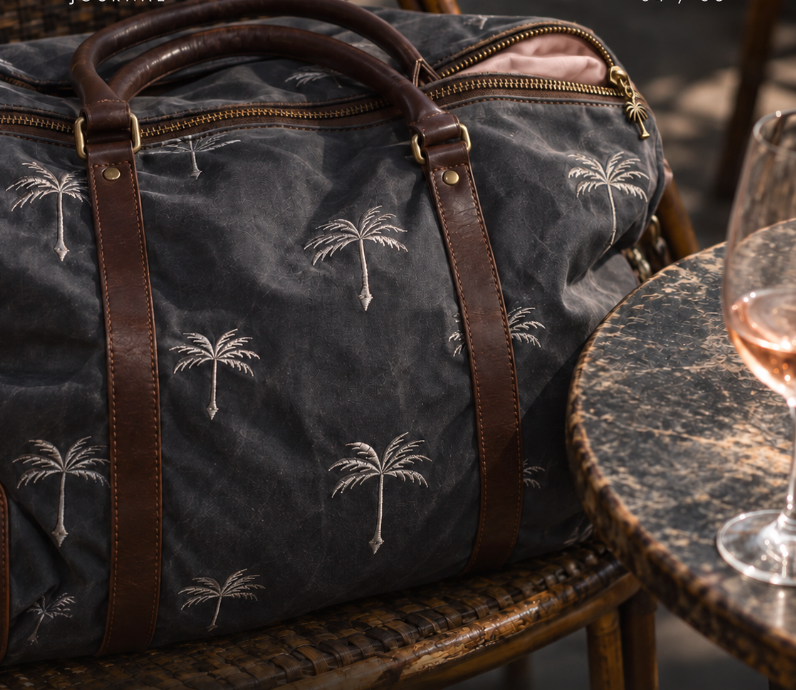
The weight of brass hardware in the hand. The sound of a zip on a quiet morning. Waxed canvas that darkens where your hands rest, softening along the lines of your own journeys. After a year, no two bags look alike, because no two lives are alike.
The Hedonist is made for exactly this. Anthracite waxed canvas that takes on marks rather than resisting them. It does not stay new, and it is not supposed to. Each scuff is a record of somewhere you went.
LUSTRA began with a simple idea: sein statt besitzen. Being over owning. A bag that sits in a wardrobe is owned. A bag that comes with you is lived. Pleasure only begins with the second.
Why the two belong together
Freedom without pleasure becomes restlessness — always leaving, never arriving. Pleasure without freedom becomes comfort, and comfort slowly turns into a room you never leave.
The people we make these bags for know this. They have stopped collecting things to prove something. They want fewer objects, better ones, that disappear into the life they actually live. A bag that stands for freedom and pleasure does not announce either. It simply makes both a little easier.
And then there is character
There is a third quality, one that only time adds. The Sovereign, cut in full leather, is about that: what a bag becomes after years of use. That is a story for another entry.
What a bag can and cannot do
A bag cannot make you free. It cannot give you pleasure. Those remain your own work.
What it can do is stay out of the way. Hold what you need, carry it lightly, and age alongside you without complaint. Every LUSTRA bag is handmade to order — not because scarcity is a strategy, but because an object made for one person tends to be used by that person.
Freedom is the only real luxury. The rest is luggage.